How a Same-Day Emergency Response Works
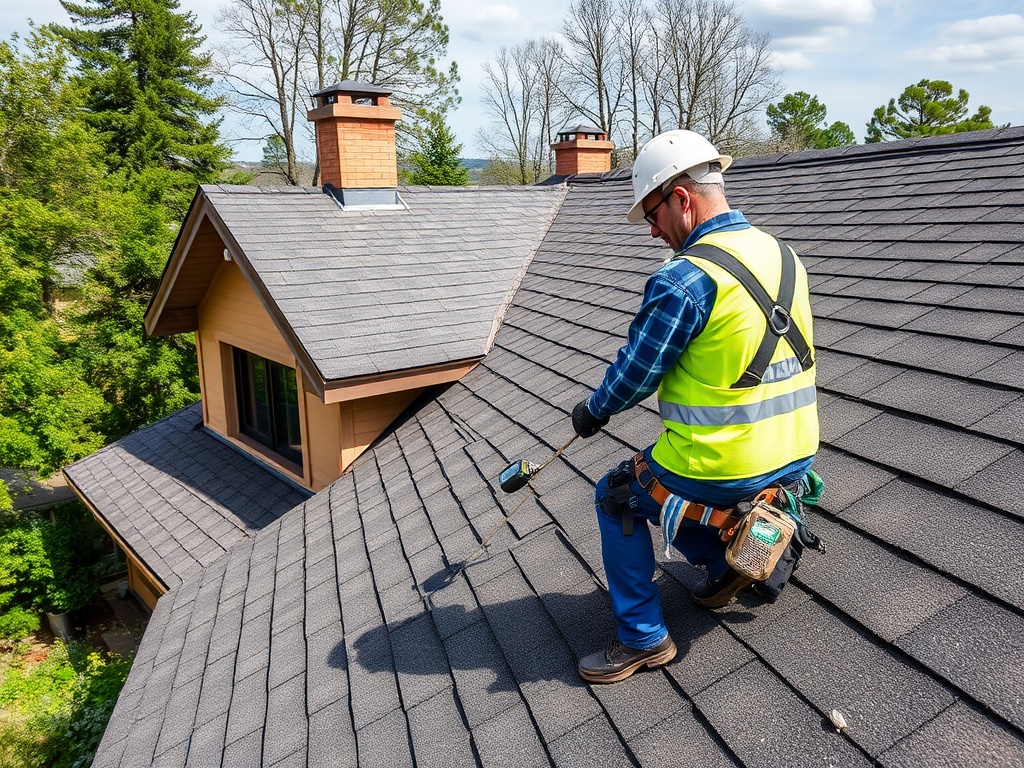
Emergency roof repair starts with containment, not paperwork. Our crew arrives with emergency tarps, gets on the rooftop by ladder or scaffold in a full safety harness, and stops the water path before anyone talks about price.
Then we trace the source. Water almost never leaks where it shows up inside. It seeps through a failed flashing detail, wicks along a rafter, and drips from a ceiling far from the actual gap.
- We pull wet debris and torn roofing felt out of the valley so the repair area can dry.
- We reset or replace the drip edge, because a bent drip edge lets water rot the fascia behind your gutter.
- We swap failed underlayment for synthetic underlayment or a self-adhered ice-and-water shield at the eave.
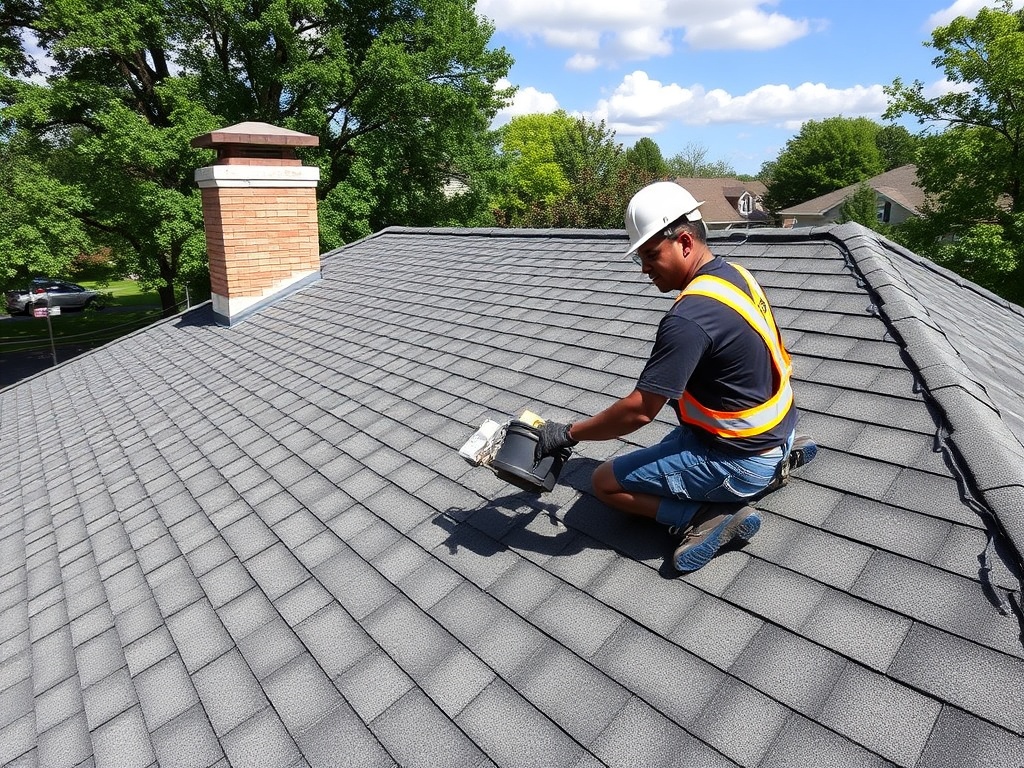
- We seal penetrations with polyurethane sealant and roof cement around pipe flashing, vent boot, and chimney flashing.
- We set replacement shingles with ring-shank nails and hand-seal every tab against wind uplift.
- We clear each downspout and check the gutter line, since trapped water destroys fascia and soffit fast.
- Apron flashing at the chimney and boot flashing at each pipe are the two spots that leak most after hail.
Roofing Materials We Stock for Storm Damage Repair
Every covering fails differently in Gulf wind and heat, so we carry pieces that match what is already on your house. A patch should disappear into the field, not announce itself.
- Asphalt shingle repairs use architectural shingle or three-tab shingle matched by color and exposure.
- Wood shake and cedar shake roofs get hand-split replacements cut to the same reveal.
- Slate, clay tile, and concrete tile sections are rebuilt with salvaged pieces and new copper counter-flashing.
- Metal panel roofs, including standing-seam panel and corrugated panel, get resealed at every exposed fastener.
- Low-slope decks take TPO, EPDM, or PVC membrane patches bedded in contact adhesive.
- Older flat roofs may need modified bitumen, torch-applied membrane, or built-up roof repair over a damp substrate.
- Historic tar, pitch, and bitumen surfaces get compatible roofing felt or tar paper so the layers bond instead of peel.
What Our Roof Inspection Checks Before We Call It Done
A roof inspection is a system check, not a glance from the driveway. We walk the whole envelope, because the leak you called about is rarely the only weak point.
- Roof pitch tells us whether water sheds fast or sits long enough to reach the decking.
- Roof deck and sheathing get probed for soft plywood or OSB that has already started to decay.
- Truss, rafter, joist, and ridge beam ends are checked for rot where warm attic air meets framing.
- Ridge, ridge cap, and ridge vent are inspected together, because a clogged vent pushes moisture into insulation.
- Valleys, hips, gables, verge, and rake edges trap debris that erodes shingle edges and starts leaks.
- Soffit, soffit vent, and attic fan performance decide how well ventilation moves humid air out of the attic.
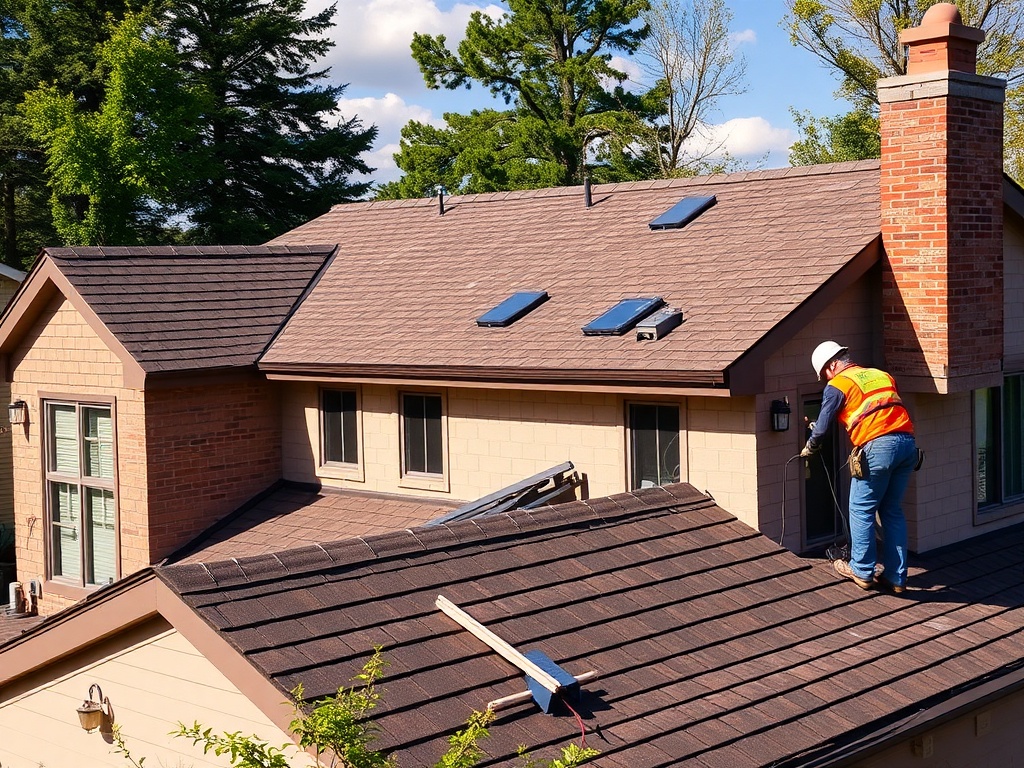
- Skylight, dormer, and chimney curbs get counter-flashing checked for lifting, corrosion, or missing fasteners.
- Parapet walls, coping, scupper drains, and roof coating are tested on commercial buildings.
- Mansard, gambrel, canopy, awning, and overhang edges take wind uplift first in a Gulf storm.
- Snow guard and anchor points are reviewed for loose screws and pulled fasteners.
- Purlin, batten, and counterbatten spacing matters on metal systems after hail damage.
Tools and Tradecraft on Every Emergency Job
Steady work shows in the details. We arrive with real gear, not just a ladder and a bucket of mastic.
- Roofing square and pry bar come out first for measuring and lifting damaged courses.
- Nail gun and air compressor speed shingle placement, while screws and fasteners hold metal panels.
- Roofing shovel strips old material without gouging the decking beneath it.
- Caulk and mastic seal small gaps that a full panel replacement would waste money on.
- Dumpster and tarp drop together, so debris leaves the same day we finish.
- Vapor barrier and insulation get checked whenever water has reached the attic side of the ceiling.
- Waterproofing and weatherproofing follow local building code, including proper flashing heights.
Flat Roofing, Commercial Roofing, and Insurance Claims
Flat and low-slope systems need different skills than a steep shingle roof. Ponding water, seam splits, and UV degradation all show up here long before they reach a ceiling tile.
Cool roof coating and reflective membrane systems improve energy efficiency, which is where sustainability in roofing and green roofing goals normally begin. Moisture meters and infrared scanning cover the roofing technology half of the inspection.
For storm damage repair, we photograph everything, measure moisture content, and write a line-item scope your adjuster can approve. That paperwork is what moves an insurance claim forward.
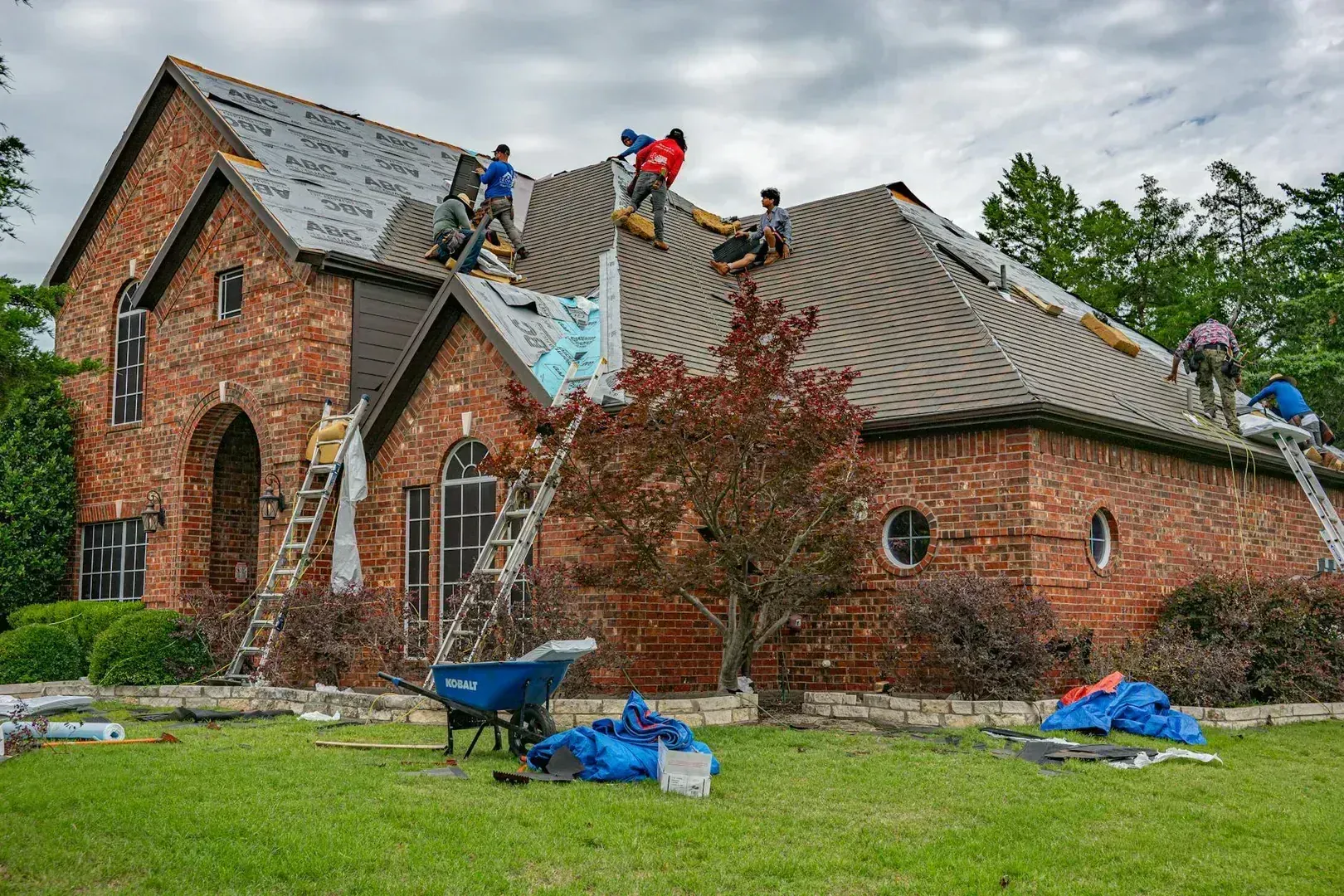
- A tear-off removes every layer down to the deck, while a recover or overlay adds new shingle over old.
- Starter course, field course, and staggered courses control how water crosses the finished roof.
- We never overlay a roof with active rot or soaked decking, because trapped moisture returns as a leak.
- Ice dam protection at the eave is rare in this climate, but we still spec ice-and-water shield on every replacement.
- Every roofer on our crew is trained on fall protection, and every job starts with a written roof estimate.
Every roofing contractor claims to be honest. We prove it with a written scope, photos before and after, and a workmanship warranty you can actually read.