Flat Roof Replacement: What the Work Actually Involves
A low-slope roof fails from the deck up, so we read moisture in the insulation and map every drain before quoting. A roofing contractor Houston TX building owners keep on call should show you that detail first.
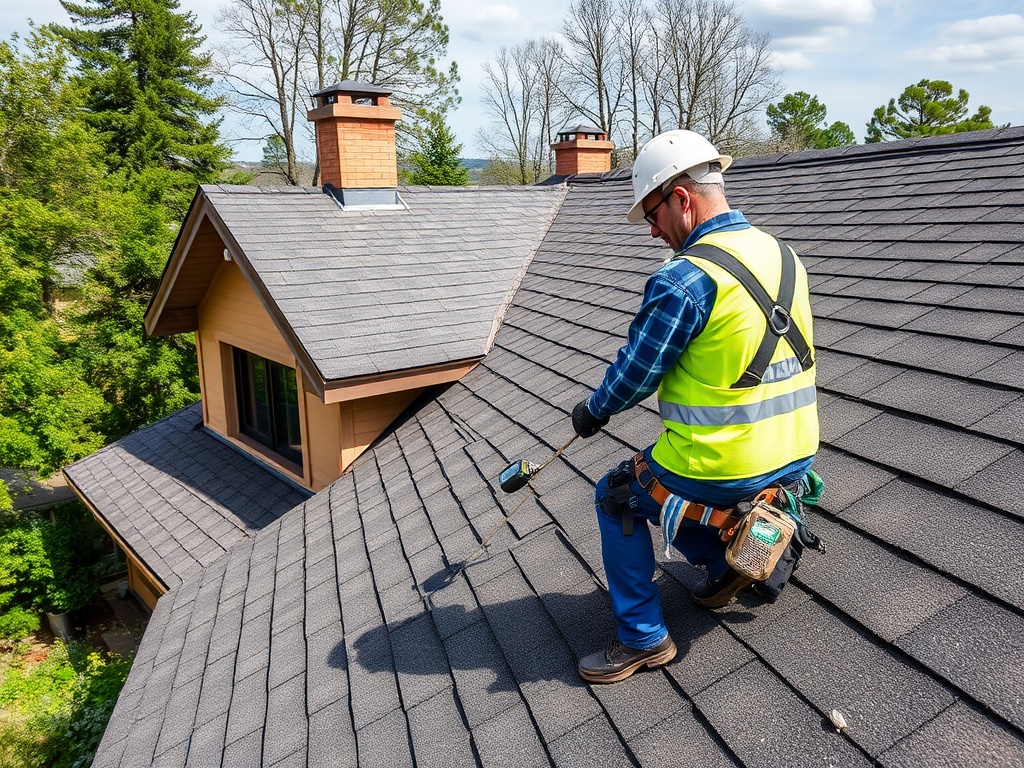
- A roof inspection walks the rooftop with a moisture meter and marks soft spots, blisters, and water sitting around each drain.
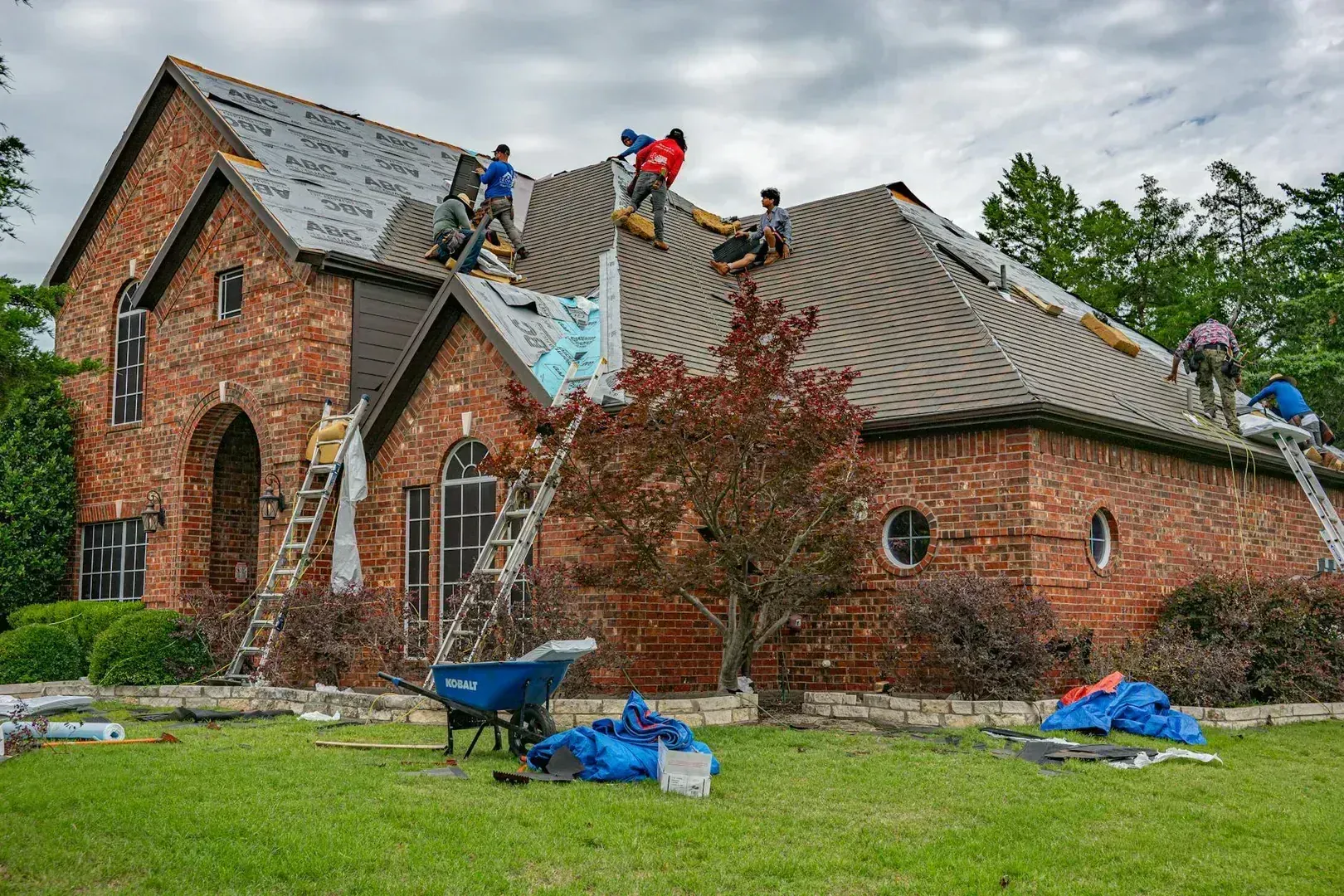
- Tear-off strips the old membrane, saturated insulation, and rotted roof deck down to sound plywood or OSB sheathing.
- Deck repairs sister damaged rafters and joists, then refasten the substrate with screws that bite into framing instead of spinning in the panel.
- New insulation and a cover board go down, because R-value and compressive strength decide how the membrane behaves for the next two decades.
- A self-adhered vapor barrier or base sheet is rolled in, with adhesive applied at edges and penetrations a nail cannot hold.
- The field course is laid, lapped, and welded or adhered, then mechanically fastened at the perimeter against wind uplift.
- Flashing closes the details: drip edge at the eave, counter-flashing at the parapet, apron flashing at walls, and pipe boots at vent stacks.
- A final roof inspection checks seams, drains, scuppers, and coping before the dumpster rolls out and magnets sweep the lot.
Flat Roofing Materials: TPO, EPDM, PVC, Modified Bitumen, and BUR
Membrane selection drives reflectivity, chemical resistance, and how long the assembly lasts. We quote two or three options so you can weigh upfront cost against warranty length.
- TPO single-ply is a white heat-welded sheet that reflects UV and resists punctures; Carlisle SynTec, Firestone, GAF EverGuard, and Versico all publish NDL warranties in the 15-to-30-year range on qualifying systems.
- EPDM rubber is a black thermoset membrane with a long field history, and its seams rely on adhesive and splice tape rather than heat welding.
- PVC membrane resists grease and restaurant exhaust, which matters when kitchen equipment vents across a rooftop.
- Modified bitumen is a torch-applied or self-adhered cap sheet over a base ply, and it suits small roofs, patching, and details where welding equipment is impractical.
- Built-up roof, or BUR, stacks roofing felt and hot bitumen, the tar-and-asphalt mix older buildings still rely on.
- Reflective coating is a maintenance tool rather than a new roof, since silicone or acrylic coating buys years on a sound membrane.
- Insulation type (polyiso, XPS, or EPS) and cover board thickness set R-value, slope, and hail tolerance, so we spec them with the membrane, not after it.
Flat Roof Warning Signs We Find on Gulf Coast Buildings
Water on a flat roof rarely announces itself. It seeps and wicks, then shows up as a stained ceiling tile two floors down. Weatherproofing comes down to water leaving faster than it arrives.
- Ponding water that still sits 48 hours after rain, usually because a drain or scupper sits above the low point.
- Blisters and delamination where adhesive released and trapped moisture boils under the summer sun.
- Seam splits along laps that opened after years of expand-and-contract cycling.
- Granule loss and chalking on bitumen cap sheets, where UV radiation flakes the surface and exposes bare asphalt.
- Alligatoring and widespread cracking that signal end-of-life wear rather than one repairable leak.
- Vent boots and boot flashing fail first, because UV dries the rubber collar, so we caulk and reseal them on routine visits.
- Soft spots underfoot that point to rot and decay in the decking and the insulation below it.
- Debris dam removal is part of every visit, since leaves and grit pile up at drains and cause the ponding that spalls the membrane.
- Steam ice and frozen condensate around rooftop vents show up after a hard freeze, so we check every equipment curb once it thaws.
Flat Roof Timelines, Costs, and Efficiency Gains
A mechanically attached single-ply system over roughly 10,000 square feet usually runs three to five working days, weather permitting. A full tear-off with new insulation and deck repairs stretches closer to two weeks.
Plan on $6 to $12 per square foot for single-ply membrane systems, and $2 to $4 for coating restoration. The high end covers tear-off, tapered insulation for drainage, and new flashing throughout.
Repair beats replacement when the membrane is young, the insulation is dry, and the leak traces to one detail. Replacement wins once moisture has spread through the assembly or building code caps how many layers you can stack.
Cool-roof membranes bounce solar heat instead of absorbing it, which trims summer cooling load on a conditioned building.
Green roofing over a waterproofing membrane handles stormwater, though it needs structural review before anyone sets a tray. Infrared moisture scans and core sampling find wet insulation without tearing off an entire field.
Flat Roofing Where It Meets Pitched Roofs
Low-slope systems are most of our commercial work, but our roofing services cover both sides of that line, including residential roofing and the transitions between them. Most roofers quote the field and skip the drains.
- Asphalt shingle roofs use architectural shingle or three-tab shingle over synthetic underlayment, with ice-and-water shield at the eaves and valleys to stop ice dam backups in a rare hard freeze.
- Wood shake and cedar shake take hand-sealed valleys and a careful color match when a single slope is replaced.
- Slate, clay tile, and concrete tile need walkable pads and a light touch, since one cracked unit becomes a custom order.
- Standing-seam panel and corrugated panel metal is fastened with screws and washers at the ribs, sealed at each penetration, and fitted with snow guards where panels shed ice.
- A dormer, gable, hip, mansard, or gambrel section reshapes the roofline, and each transition needs its own step flashing, verge, and rake detail.
- Roof pitch under a 2:12 slope gets welded or adhered, while anything steeper is nailed, back-nailed, and hand-sealed through the starter course.
- Purlin, batten, and counterbatten framing carries metal panel and tile above the decking, while a truss or ridge beam carries that load below.
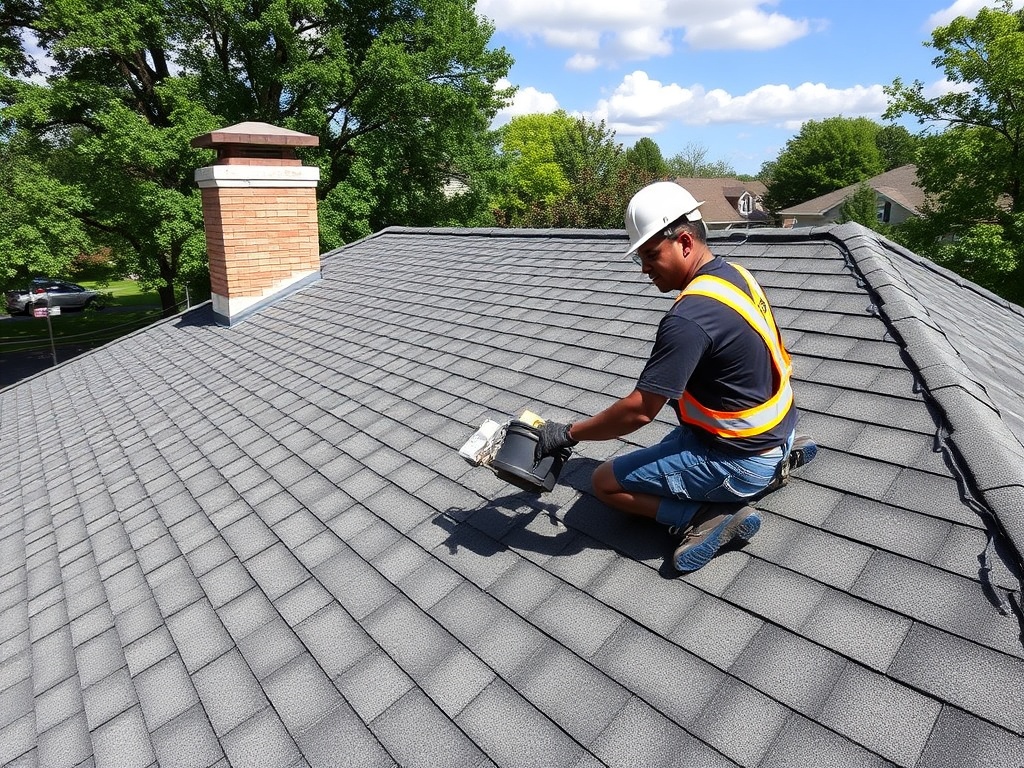
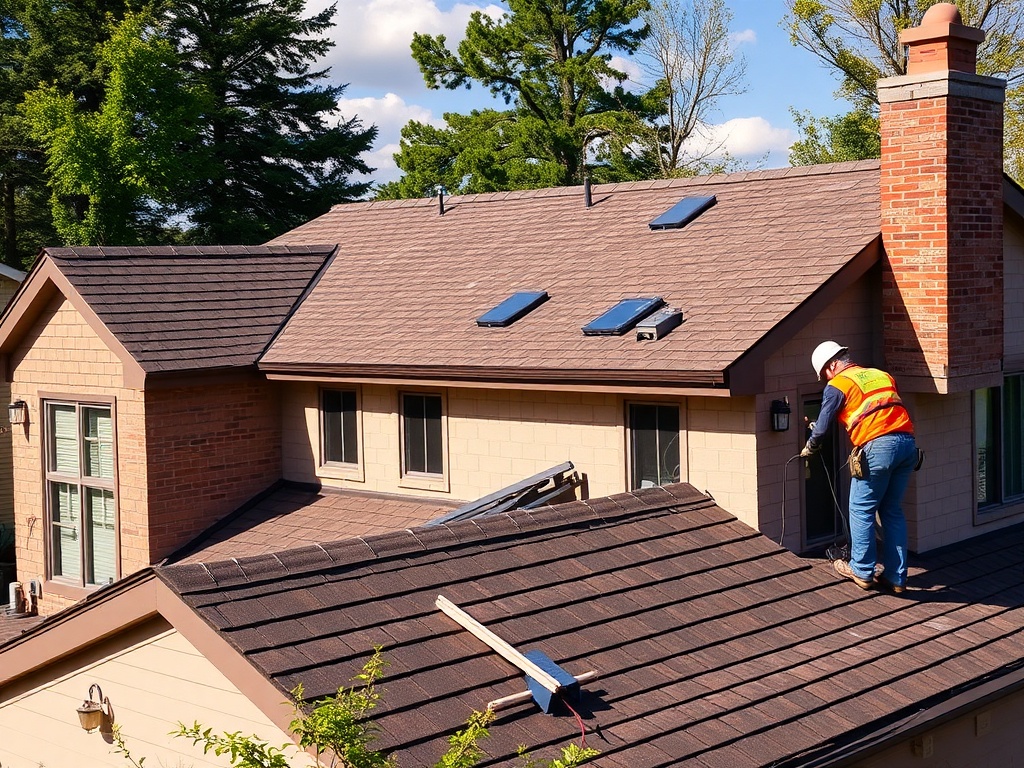
- Chimney flashing, pipe flashing, and skylight curbs are the details we recaulk most, using mastic and roof cement where a sealant bead alone will not hold.
- Roof anchors, gutters, and downspouts tie into the roofline, while ridge cap, ridge vent, soffit vent, and attic fan keep ventilation moving; a canopy, awning, or overhang shares flashing with the wall it meets.
- Ladders, scaffold, and a safety harness reach the work, while a roofing square measures coverage and a pry bar, roofing shovel, nail gun, and air compressor handle removal and fastening.
- Tar paper and roofing felt gave way to synthetic underlayment, which is lighter, tears less, and lies flatter under shingle courses.
Our service areas cover the greater Houston metro and the surrounding Gulf Coast counties, where local expertise on humidity, hail, and UV exposure shapes every spec we write.
Call 2816990564 for a free roof estimate, and we will schedule the walk-through, measure the roof, and put the numbers in writing before you commit to anything.