How Gutter Installation Runs, Step by Step
Gutter installation on a Houston home starts with measurement, not with a truck full of metal. We walk the roofline, note the roof pitch, and count downspout drops before anything comes off the house.
- We measure every run and check roof pitch, since a steep hip or gable sheds water faster than a low-slope section.
- Old gutters and downspouts come down, then we inspect the fascia and soffit behind them for rot, sag, or peeling paint.
- Soft fascia gets replaced first, because no hanger holds a straight line on decayed wood.
- We check the drip edge and eave line, then reseal joints with gutter sealant instead of relying on roof cement alone.
- Seamless 5-inch and 6-inch K-style gutter is formed on site, so a long run has no mid-span joint to leak.
- Hangers are fastened into rafter tails with ring-shank nails or screws sized to resist wind uplift.
- Downspouts are sized and routed to move drainage runoff past the foundation and away from landscaping.
- We flood-test each run with a hose to confirm the weatherproofing, then pick up scraps and haul the debris off in a dumpster.
Materials That Fit Houston Rooflines
Aluminum K-style gutter is the workhorse around here because it shrugs off humidity and will not rust through. For older homes, half-round copper is often the right match.
- Seamless 5-inch and 6-inch K-style aluminum is formed at your house, so each trough fits the actual eave instead of a stock length.
- Half-round copper gutters suit historic architecture and age into a patina that never needs paint or a coating.
- Leaf guards keep pine needles and shingle grit out of the trough, which causes most of the overflow we see.
- Downspouts in matching aluminum carry water down and out, with splash blocks finishing the drainage runoff.
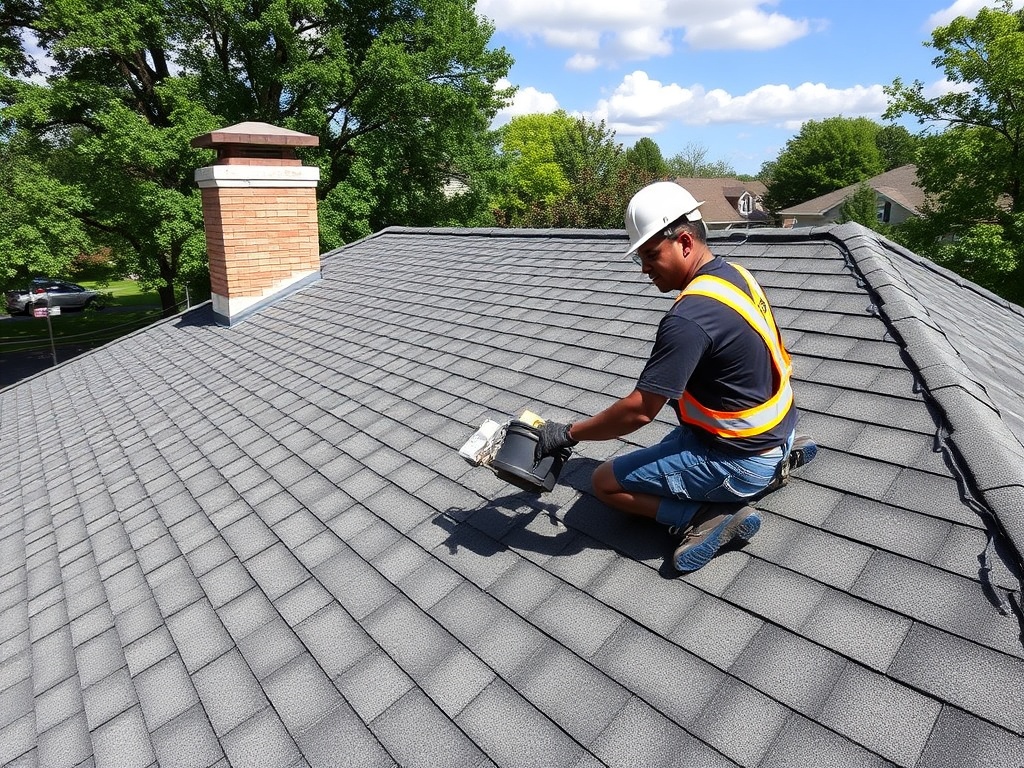
- Gutter sealant handles end caps and miters, while mastic and roof cement handle flashing repairs and spot waterproofing on the roof above.
- Leaf dam removal, cleaning, and partial tear-off work are quoted as line items, so you know what you are paying for.
- Recover and overlay options are sometimes allowed over sound decking, but most jobs here need a full tear-off once the wood is soft.
What We Inspect, and What a Failing System Looks Like
Water rarely announces itself. It wicks behind the fascia, seeps into the soffit, and shows up as a ceiling stain two rooms away. By then the damage has had months to work.
- Rot and decay in fascia boards, which is the first thing we probe with a pry bar.
- Gutters that sag, settle, or pull loose from the eave after a heavy thunderstorm.
- Granule loss on asphalt shingle surfaces, which sends grit into the trough and clogs the outlet.
- End-of-life wear on a three-tab shingle roof, where material flakes and curls along the rake.
- Peeling paint and spalling on the fascia below, a sign water is sitting where it should not.
- Eroded soil and washed-out mulch along the foundation, which tells us the downspouts are undersized.
Roof Coverings, Flashings, and Decking Above the Eave
A gutter is one piece of a water-shedding system. When we are on your rooftop, we look at everything above the eave line because each part depends on the next.
- Asphalt shingle roofs, from architectural shingle and three-tab shingle to wood shake and cedar shake, laid in staggered courses over a starter course.
- Hard surfaces including slate, clay tile, concrete tile, and heavier tile roofs that need more hangers per square.
- Metal panel systems such as standing-seam panel and corrugated panel with exposed fasteners.
- Low-slope assemblies: membrane, TPO, EPDM, PVC membrane, built-up roof, and modified bitumen.
- Underlayment layers of roofing felt, tar paper, and synthetic underlayment beneath every field course.
- Asphalt, tar, and bitumen binders that show up in patch work and in old felt layers.
- Ice-and-water shield, a self-adhered membrane at the eave, which matters when an ice dam forms during a hard freeze.
- Roofline details like the ridge, ridge cap, ridge vent, valley, rake, hip, gable, verge, dormer, and skylight.
- Flashing details including step flashing, counter-flashing, apron flashing, chimney flashing, pipe flashing, pipe boot, vent boot, and boot flashing.
- Roof cement, mastic, caulk, and adhesive at penetrations, plus a vapor barrier inside the assembly.
- Decking of plywood or OSB sheathing, fastened with nails and screws into the truss and rafter framing.
- Structural members like the joist, ridge beam, purlin, batten, and counterbatten carry load above your ceiling.
- Chimney, parapet, scupper, coping, and gutter apron details where a flat section meets a wall.
- Coating products that extend the life of a flat roof and cut summer heat gain.
- Snow guard and roof anchor hardware we install for safe access on steep metal.
- Canopy, awning, mansard, gambrel, and overhang features that change how water leaves the roof.
Ventilation, Tools, and What Drives the Timeline
The attic does quiet work. Poor ventilation pushes heat and moisture through the roof deck, and that shortens the life of everything above it, including the substrate your hangers bite into.
- Insulation levels and ventilation paths through the ridge vent, soffit vent, and attic fan keep the deck dry.
- Green roofing layers and reflective coating lower cooling demand, a small sustainability win in Houston heat.
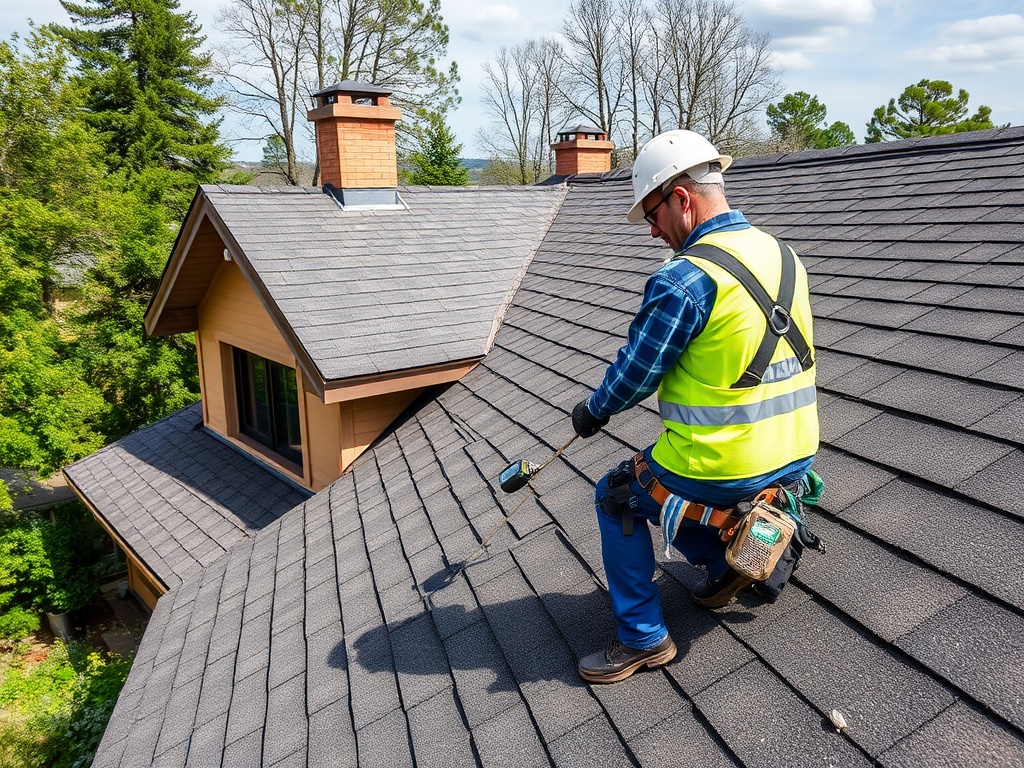
- Scaffold, ladder, and safety harness get set before the first cut, with roof anchors checked twice.
- Every roofer on the crew wears a harness before stepping past the eave, no exceptions.
- A roofing square, nail gun, and air compressor handle repair work above the gutter line.
- Pry bar and roofing shovel pull old hangers; a torch stays reserved for modified bitumen only.
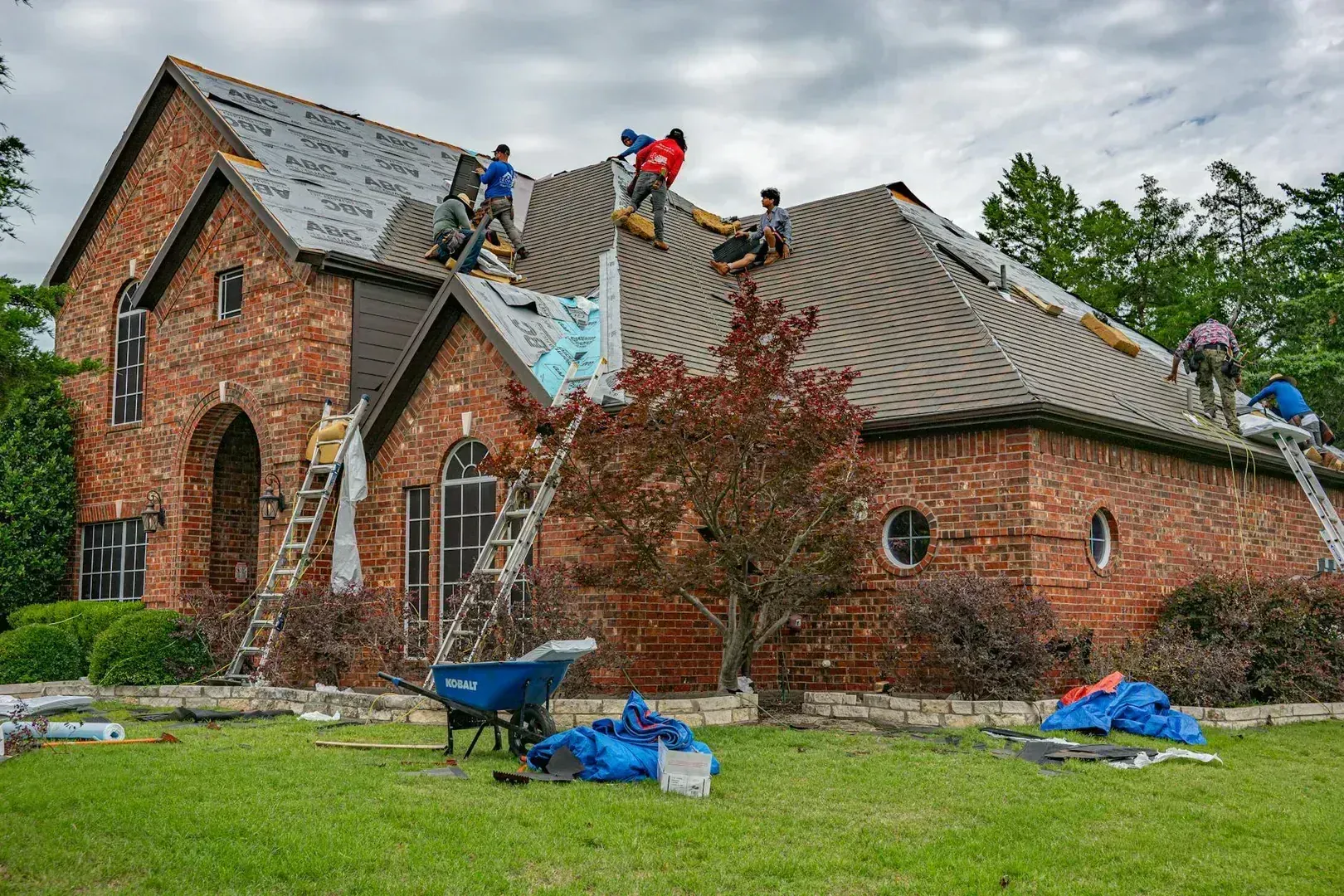
Most single-story homes take one day. Two-story eave lines, steep pitch, or a roof replacement underneath stretch it to two or three. We hand you a line-item roof estimate before we start.
Cost tracks linear footage, profile, hanger spacing, downspout count, and how much fascia repair is hiding underneath. Building code requirements for discharge points matter too. Nobody honest quotes a number before seeing the eave.
If storm damage took the gutters out with the shingles, our insurance claim assistance covers the roof inspection, photos, and paperwork an adjuster expects.
Call 281-699-0564 for a free estimate. Houston Roofing Team is a licensed and insured Houston roofing contractor, and every run we hang is backed by our written workmanship guarantee.